Artículo: El desastre climático de Rio Grande do Sul corre a cuenta del capital
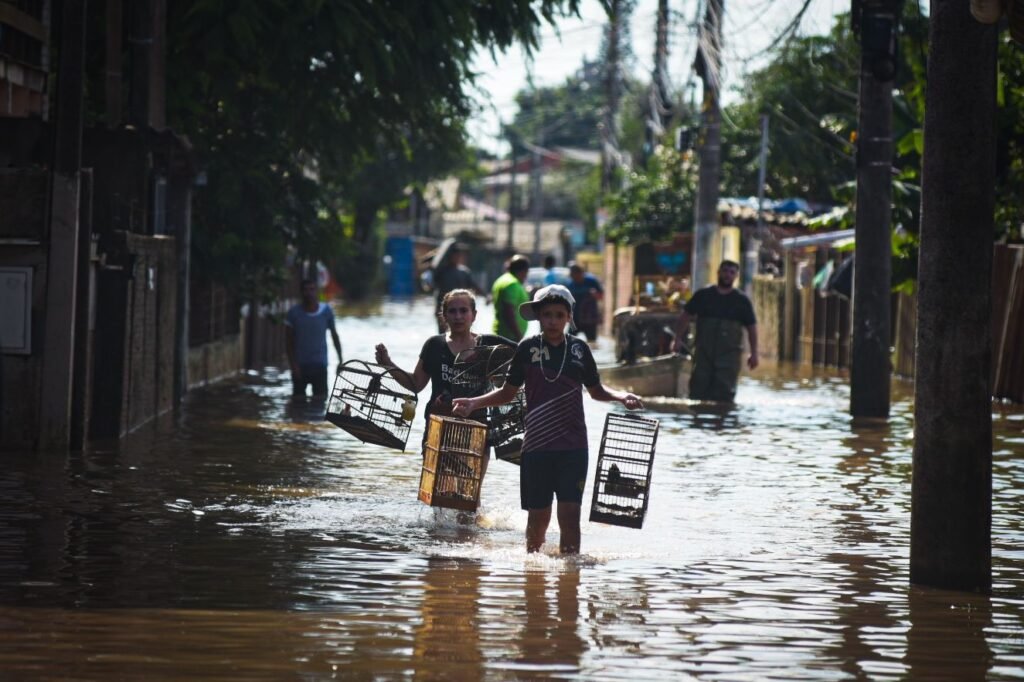
Con un gobierno estatal que ha promovido una serie de ajustes fiscales, ha autorizado la deforestación de áreas de protección ambiental, ha desmantelado la ley estatal contra los pesticidas, privatizado los servicios públicos y adoptado políticas de austeridad para su población, Rio Grande do Sul se enfrenta a una crisis climática sin precedentes en su historia. Es necesario reflexionar sobre la totalidad del problema y recordar que las lluvias y las inundaciones de las ciudades son consecuencia de una serie de hechos que vienen siendo denunciados por los movimientos y organizaciones populares de Rio Grande do Sul desde hace medio siglo. Esta vez, casi todos los 497 municipios de RS se han visto afectados por las inundaciones. Al menos un millón y medio de personas han sido afligidas, y el regreso de las lluvias torrenciales en el fin de semana ha reforzado aún más este panorama. Pero estas cifras no explican por qué los impactos medioambientales no se distribuyen por igual. Las mujeres, los cuerpos negros, las comunidades periféricas, las personas que viven en la calle, los trabajadores en paro y las personas en situación precaria de vivienda son quienes más sufren los impactos de las inundaciones. Siempre son los más vulnerables los que más sufren, y también los menos responsables del problema. Esta desigualdad estructural del capitalismo, construida sobre el patriarcado y el genocidio colonial, así como la lucha de clases, debe ser considerada desde la perspectiva de la Justicia Ambiental, así como en la lucha contra el Racismo Ambiental. Lo que vive la población de Rio Grande do Sul refleja la bancarrota de un sistema económico que centra sus intereses en la obtención de beneficios para una pequeña parte de la población. Toda la explotación de estas riquezas se sustenta en una extracción intensa y desorganizada de bienes y recursos naturales. En las últimas décadas, este sistema se ha destruido exponencialmente, sin poder seguir el ritmo de los ciclos de regeneración de la tierra y las aguas. Seguimos reproduciendo una mentalidad de dominación sobre la naturaleza, en lugar de armonía con ella, como nos enseñan los pueblos originarios. Las escenas que vemos en Porto Alegre, la capital de Rio Grande do Sul, demuestran que no hay fronteras para el agua y, al mismo tiempo, que ya hemos sobrepasado los límites de sostenibilidad del planeta Tierra para la sociedad capitalista.Uno de los resultados de traspasar los límites de la relación entre el ser humano y la naturaleza es la producción de un nuevo tipo de refugiados: los refugiados climáticos. Mientras que hoy en día muchas personas en el mundo se ven obligadas a abandonar su tierra natal a causa de las guerras, en busca de mejores condiciones de vida, y se ven forzadas a emigrar a otros países. El número de personas que emigran a causa de sequías, inundaciones y huracanes no deja de crecer. La Agencia de la ONU para los Refugiados (ACNUR) calcula que, en 2020, cerca de 30,7 millones de personas fueron desplazadas por catástrofes relacionadas con el clima. El Banco Mundial calcula que 17 millones de personas en América Latina tendrán que abandonar sus hogares por cuestiones medioambientales. El Observatorio de Desplazamiento Interno (IDMC) afirma que 708.000 brasileños emigraron como consecuencia de desastres naturales en 2012. La única causa de esta realidad es la explotación depredadora de la naturaleza, lo que es, por tanto, una decisión política. Pero lo que hace que la tragedia climática de Rio Grande do Sul sea tan impactante y mediática no es la magnitud de los daños ni el número de personas afectadas. Lo chocante es ver la fuerza de las aguas retomando su curso e invadiendo también casas, barrios y municipios que, según la ley del capital financiero, deberían estar a salvo de las penurias reservadas sólo a las clases subalternas. La perplejidad de la catástrofe es la constatación por parte de la pequeña, media y gran burguesía de que, por mucho que se empeñen en ignorar la emergencia climática, ésta no desaparecerá. Aunque hoy el sufrimiento afecta de forma desproporcionada a comunidades cruzadas por marcadores de clase, género y raza, la catástrofe de RS anuncia un futuro devastador para toda la sociedad, con ciudades enteras perdidas y más de 230.000 refugiados climáticos que ya no podrán regresar a sus hogares. Esto exige que identifiquemos quién tiene la culpa y por qué el statu quo de los negocios, el “business as usual”, no podrá dar las respuestas justas, democráticas y solidarias a gran escala que se necesitan. La lista es larga e histórica; tenemos que cobrar la deuda climática y cambiar el sistema. Pero tenemos que empezar por los más estrecha y directamente implicados. Eduardo Leite (PSDB), actual gobernador del estado de Rio Grande do Sul, destruyó en 2019 la iniciativa del Código Ambiental del Estado, elaborado técnica y democráticamente hace nueve años a través de debates, audiencias públicas y diversas mejoras. El texto original del Código, del año 2000, contó con la contribución y movilización de organizaciones ecologistas pioneras en el estado y en Brasil, como Agapan (Asociación Gaucha de Protección al Ambiente Natural) y Amigas de la Tierra. Las propuestas más relevantes para enfrentar la crisis climática fueron completamente destruidas por la iniciativa de su gobierno, que alteró por lo menos 480 temas centrales. Fiel a la racionalidad corporativa y empresarial, Leite hizo todo lo posible para flexibilizar los requisitos vitales para facilitar la concesión de licencias ambientales a las megaempresas. Y cuando las aguas de la emergencia climática le “golpearon en el culo”, agradeció la solidaridad de Elon Musk y de la comunidad empresarial por su “ayuda humanitaria S.A.”. En Porto Alegre, el intendente Sebastião Melo (MDB), sucesor del también derechista Nelson Marchezan Jr, que le dejó como legado la extinción del Departamento Municipal de Alcantarillados Pluviales (DEP), atravesó las inundaciones de 2023 y, ahora en 2024, con 19 de las 23 bombas de los sistemas de contención de inundaciones apagadas, con la falta de preparación, la precariedad y la falta de agua como sellos
Article: The climate disaster in Rio Grande do Sul is on capital’s account
The climate disaster in Rio Grande do Sul is on capital’s account With a state government that has promoted a series of fiscal adjustments, authorised the deforestation of environmental protected areas, dismantled the state law against pesticides, privatised public services and adopted austerity policies for its people, Rio Grande do Sul is facing a climate crisis that is unprecedented in its history. We need to reflect on the totality of the problem and remember that the rains and the flooding of the cities are the consequences of a series of factors that have been denounced by popular movements and organisations in Rio Grande do Sul for half a century. This time, almost all of the state’s 497 municipalities were affected by the floods. At least one and a half million people have been affected, and the return of torrential rain over the weekend has further reinforced this picture. However, these figures do not explain why the environmental impacts are not distributed equally. Women, black bodies, peripheral communities, people living in the streets, unemployed workers and people in precarious housing situations suffer the most from the impacts of the floods. It is always the most vulnerable who suffer the most, despite being the least responsible for the problem. This structural inequality of capitalism, built on patriarchy and colonial genocide, as well as class struggle, must be considered from the perspective of Environmental Justice, as well as in the fight against Environmental Racism. What the population of Rio Grande do Sul is experiencing reflects the bankruptcy of an economic system that centres its interests on making a profit for a small portion of the population. And all the exploitation of the riches is sustained by an intense and disorganised extraction of goods and natural resources. In recent decades, this system has destroyed exponentially, failing to keep up with the regeneration cycles of the land and waters. We continue to reproduce a mentality of domination over nature, rather than harmony with it, as the native peoples teach us. The scenes we see in Porto Alegre, the capital of Rio Grande do Sul, show that there are no boundaries for the waters and, at the same time, that we have already exceeded the planet’s limits for sustaining in capitalist society. One of the results of pushing the boundaries of the human-nature relationship is the production of a new kind of people: climate refugees. While many people in the world today are obligated to leave their homeland because of wars, in search of better living conditions and forced to migrate to other countries, the number of people migrating because of droughts, floods and hurricanes is no less growing. The UN Refugee Agency (UNHCR) estimates that 30.7 million people were displaced by climate-related disasters by 2020. The World Bank estimates that 17 million people in Latin America will have to leave their homes because of environmental issues. The Internal Displacement Monitoring Centre (IDMC) states that 708,000 Brazilians migrated as a result of natural disasters in 2012. The sole cause of this reality is the predatory exploitation of nature, which is therefore product of political decisions. But what makes the climate tragedy in Rio Grande do Sul so shocking and media-friendly is not the extent of the damage or the number of people affected. What is shocking is to see the force of the water resuming its course and invading homes, neighbourhoods and municipalities that, according to the law of financial capital, should be safe from the hardships reserved only for the subaltern classes. The perplexity of the disaster is the realisation on the part of the petty, middle and big bourgeoisie that, no matter how hard they try to ignore the climate emergency, it won’t go away. Although today the suffering is disproportionately affecting communities crossed by class, gender and race markers, the disaster in RS heralds a devastating future for society as a whole, with entire cities lost and more than 230,000 climate refugees who will no longer be able to return to their homes. This demands that we identify who is to blame and why the so-called “business as usual” will not be able to provide the fair, democratic and supportive responses that are required on a large scale. The list is long and historical; we need to collect the climate debt and change the system. But we have to start with those most closely and directly involved. In 2019, Eduardo Leite (PSDB), the current governor of the state of Rio Grande do Sul, destroyed the State Environmental Code initiative, which was technically and democratically developed nine years ago through debates, public hearings and various improvements. The original text of the Code, from 2000, had the contribution and mobilisation of pioneering ecological organisations in the state and Brazil, such as Agapan (Local Agency for Environmental Protection) and Amigas da Terra (Friends of the Earth). The most relevant proposals for tackling the climate crisis were completely destroyed by his government’s initiative, which altered at least 480 central themes. Loyal to corporate and business rationality, Leite did everything he could to make vital requirements more flexible in order to make environmental licensing easier for mega-businesses. And when the waters of the climate emergency “hit him in the arse”, he thanked Elon Musk and the business community for their “humanitarian aid S.A.”. In Porto Alegre, Mayor Sebastião Melo (MDB), successor to the also right-winger Nelson Marchezan Jr., who left him the legacy of the extinction of the Municipal Department of Wastewater Sewers (DEP), went through the floods of 2023 and, now in 2024, with 19 of the 23 pumps of the flood containment systems turned off, with unpreparedness, precariousness and lack of water as the hallmarks of his administration. Far from the chaos, the fascists are calling for the climate debate not to be politicised, and Melo is telling the capital’s rich to go to their beach houses. The municipalities on the coast, not affected by the floods, declare an emergency and ask the federal government